
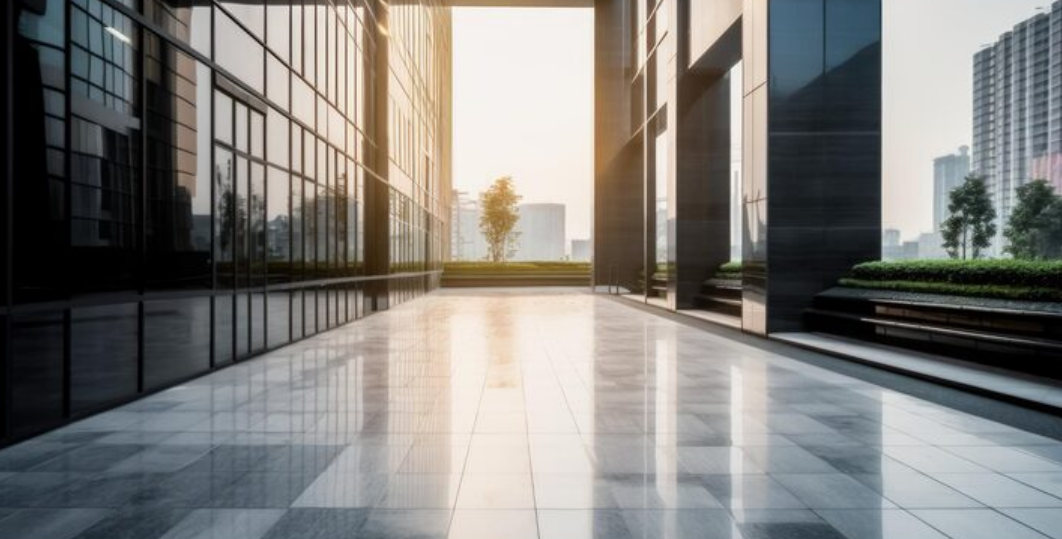
Nobody schedules a facilities audit after everything goes well.
The safety review usually comes after something happens — a near-miss near the reception desk, a slip on the polished lobby floor during a rainy morning. By then the question is not whether to upgrade the floors. It is why this was not done sooner.
Office buildings in Dubai carry a specific floor safety challenge. The commercial tile and stone defining corporate lobbies, corridors, and washrooms is almost uniformly selected for appearance — beautiful under dry conditions and genuinely hazardous under wet ones. In a building with hundreds of occupants throughout the day, the wet condition is a regular occurrence.
This guide covers the specific floor safety upgrades that make the most difference in office buildings, what a professional slip resistant treatment for tile achieves in each area, and how building managers can approach floor safety as a documented programme rather than a reactive response to incidents.
The Office Building Floor Safety Problem Nobody Talks About
Office building floor safety does not receive the same attention as fire safety or electrical compliance — even though slip and fall incidents are consistently among the most common causes of workplace injury claims. The reason is partly visibility: fire safety has mandatory inspections and documented compliance records. Floor safety has none of these by default.
The floors in most office buildings have never been tested for slip resistance. They were installed to an aesthetic specification, handed over to facilities management, and cleaned ever since. Cleaning does not improve slip resistance — it often reduces it, as cleaning products deposit friction-reducing residue over time.
Under UAE Federal Law No. 8 of 1980, employers and building owners have a duty to maintain safe environments. A slip incident resulting in injury will be investigated, and that investigation will ask what the friction coefficient of the floor was and what was done to ensure it met a safe standard. Without documented floor safety measures, there is no satisfactory answer.
slip resistant treatment for tile programme closes without touching a single tile.
The Five Highest-Risk Areas in Any Office Building
Floor safety risk in an office building is not evenly distributed. These are the five areas where the combination of traffic, moisture, and surface type creates the highest probability of a slip incident:
Main entrance lobbies and reception areas. Risk is highest here. Every person entering on a wet morning brings moisture from outside. Polished marble, large-format glazed tile, and sealed screed floors perform at their most dangerous when the weather provides exactly the conditions that most impact impressions: rain, humidity, and wet shoes.
Washrooms and toilet facilities. The permanent moisture contact in office washrooms, combined with soap residue and cleaning product film, creates a chronic slip hazard that is present every day rather than in weather-dependent peaks. Washroom floors in commercial buildings are among the most common sites for slip incidents that go unreported. A professional slippery floor solution for a washroom should address both the floor surface and the transition from the wet washroom tile to the drier corridor tile outside it.
Staircase tiles and landings. Staircases concentrate every risk factor: vertical movement, higher foot-contact loads, often the same polished tile as the lobby, and the consequence of a slip being a fall rather than a stumble. Staircase tile surfaces are frequently the most dangerous in a building and among the least frequently assessed.
Ground floor corridors and lift lobbies. These are transition zones where outdoor moisture is still present on shoes, where foot traffic converges and diverges rapidly, and where polished tile creates the same hazard as the lobby at a lower-profile location. They are also where a slippery floor solution is most likely to be deferred because the space looks less prominent than the lobby — even though the traffic density and moisture exposure are often similar.
Pantry and kitchen areas. Office kitchens concentrate water, coffee spillage, and heavy foot traffic at peak times. These surfaces are cleaned frequently but almost never treated for slip resistance. The combination of cleaning product residue and daily spill contamination makes office pantry floors one of the most consistently hazardous surfaces in commercial buildings.
What Slip Resistant Treatment for Tile Actually Achieves in a Commercial Context
The specific value of slip resistant treatment for tile in an office building context is that it addresses the friction deficit of the existing surface without requiring renovation, without altering the appearance of the space, and without the operational disruption that any physical floor change would create.
In-surface chemical treatment modifies the glaze or ceramic surface to create micro-traction channels — invisible, imperceptible, but producing a measurable improvement in wet DCOF from a typically dangerous 0.25–0.35 range to a safe 0.50–0.65. A single bathroom or corridor can be treated and returned to service within hours.
The documentation value is equally important. Every treated surface can be tested with a calibrated tribometer and the result recorded on a certificate. That certificate answers the question any insurer or legal team will ask following an incident: was this surface treated to a verified friction standard?
non slip epoxy floor coating systems provide the higher-build solution appropriate for heavier traffic, wheeled equipment, and contamination conditions that in-surface treatment alone cannot fully address. The epoxy base with aggregate broadcast creates a textured profile that maintains traction under demanding conditions and is applied to the existing concrete or screed without tile replacement.
Building a Floor Safety Programme Rather Than a One-Off Fix
The most effective approach to office building floor safety is a programme: an initial assessment establishing the friction baseline for every floor area type, a prioritised treatment plan addressing the highest-risk areas first, and a scheduled maintenance protocol preventing treated surfaces from degrading below the safe threshold over time.
The initial assessment is where most building managers are surprised. A professional friction assessment typically reveals a significant performance range across the building — some surfaces already safe, some borderline, some genuinely hazardous. The assessment tells you where the risk is concentrated, allowing treatment investment to be directed at the areas that need it most.
slip resistant treatment for tile or coating system to each area according to the assessment findings and the specific surface type. Different tile types in different areas of the building may require different treatment chemistry — a professional provider specifies the correct approach for each surface rather than applying a single product uniformly.
The maintenance protocol is the step most facilities programmes underdeliver on. Treatment chemistry has a lifespan — typically three to five years in commercial environments. A maintenance schedule that includes a re-test and maintenance pass at the appropriate interval keeps the building within the safe friction range rather than allowing it to drift back toward the baseline over time.
For building managers who want to establish both the physical safety standard and the documented compliance record, working with Non Slip Concrete And Floor Coating Services in Dubai providers and established Anti Slip floor Solution and Flooring experts in Dubai who can assess, treat, certify, and schedule maintenance provides the complete picture — not just a treated floor, but a documented floor safety programme with a paper trail.
The Surfaces That Benefit Most and Why
Different surfaces in an office building respond to slip resistant treatment for tile in different ways, and the prioritisation of treatment investment should reflect this.
Polished marble and granite in lobbies respond well to in-surface treatment and produce the most dramatic friction improvement relative to their untreated baseline. These are typically the highest-profile surfaces in the building and the most dangerous under wet conditions — treating them addresses the highest-impact risk.
Large-format glazed porcelain, the dominant surface in modern Dubai office interiors, responds consistently to professional in-surface treatment. The large format means fewer grout lines and therefore less naturally occurring texture — making the friction deficit more severe and the treatment benefit more significant.
non slip epoxy floor coating or in-surface treatment depending on the tile type and the level of contamination from soap and cleaning products. The treatment should be specified following a surface assessment rather than selected generically.
Concrete floors in service areas, loading docks, and basement car parks require an epoxy aggregate system rather than in-surface treatment — the concrete pore structure, heavy traffic, and contamination profile of these areas require a coating capable of maintaining traction under conditions that tile treatment was not designed for.
What to Include in a Building Safety Review
Floor safety is most effectively addressed as part of a comprehensive building safety review rather than as a standalone project. Including friction assessment alongside fire safety, electrical compliance, and accessibility reviews ensures findings are documented in the same compliance framework and addressed with the same priority.
The floor safety component of a building review should include a room-by-room friction assessment, a prioritised treatment plan with cost estimates, a specification of treatment chemistry for each surface type, and a post-treatment friction certificate for every treated area.
When commissioning a slip resistant treatment for tile programme for an office building, ask specifically about the provider’s experience with commercial buildings of comparable scale and surface mix. References from comparable commercial projects are the most reliable indicator of relevant capability.
Ask about the scheduling approach. Treatment in an occupied building requires careful sequencing — lobby during low-traffic hours, washrooms phased room by room, staircases with alternative routes. A provider who has not thought through the operational logistics will create unnecessary disruption.
Ask about the warranty and maintenance schedule. These are the parameters that allow a building manager to plan and budget for floor safety on a multi-year horizon rather than reacting to deterioration.
The Building That Cannot Answer the Question Is the Building at Risk
After every serious workplace slip incident, the investigation asks the same questions: what was the friction coefficient of this floor, what standard was it specified to, and when was it last verified? The building that can answer these with documented evidence is in a fundamentally different position from one that cannot.
A slip resistant treatment for tile programme in an office building is not a significant capital investment. It is a maintenance programme — one that produces a measurable safety improvement, creates a documented compliance record, and costs a fraction of a single successful liability claim.
Start with a friction assessment. Know the numbers. Prioritise, treat, test, and document. Then schedule the maintenance to protect the investment.
The floor is either part of the safety story or it is a gap in it. The gap does not stay empty.
The Questions Underneath the Questions
What facilities managers and building owners actually ask. And the concern behind each question that usually goes unspoken.
How do we treat floors in an occupied building without shutting down operations?
More manageable than most expect. In-surface tile treatment is applied, dwelled, neutralised, and rinsed within two to four hours per area. Most commercial buildings are treated in phases: lobby during early morning hours, washrooms one by one, corridors during lunch or evening. A professional provider should present a room-by-room scheduling plan at the proposal stage.
We have a mix of marble lobby floors, ceramic washroom tiles, and concrete in the basement. Does each area need a different treatment?
Yes — and this is why the assessment step matters. Polished marble requires different chemistry from glazed ceramic, which differs from the epoxy aggregate system appropriate for concrete. A provider who applies the same product to every surface is not making a considered specification. The assessment should identify each surface type and project the expected post-treatment DCOF for each area.
Our cleaning team uses strong descaling products on the marble lobby. Will the treatment hold up?
Strong acid-based descalers and high-alkalinity cleaners degrade the micro-texture created by in-surface treatment over time. The provider should specify which cleaning products are compatible and which are not, and that specification should be communicated to the cleaning team and included in the building’s facilities documentation.
The building developer says the tiles are rated as slip resistant. Do we still need treatment?
Almost certainly yes, unless the developer can produce a measured DCOF result from a calibrated tribometer test under wet conditions on the installed tile in the actual building. Tile slip resistance ratings from manufacturers are established under laboratory conditions that bear limited relationship to wet, contaminated, high-traffic commercial use.
How often does the treatment need to be redone?
In a commercial office building with compatible cleaning protocols, in-surface treatments typically last two to four years before a maintenance pass is warranted. A friction re-test at the two-year mark tells you whether treatment is needed yet. If it has drifted below the threshold, a maintenance application restores it. This scheduled approach keeps the building continuously compliant.
We are renewing our lease and the landlord is responsible for the building structure. Who pays for floor treatment?
Non-permanent in-surface treatments are considered tenant maintenance and most commercial leases allow them without landlord consent. Where a coating system on structural concrete is involved, landlord consent is typically required. Test the floors, present the results to the landlord as a safety issue, and in most cases the question of who pays resolves itself more easily than it would in the abstract.
What documentation should we keep after the treatment is done?
The documentation package should include: pre-treatment friction test results for each area, treatment specification with product and dwell time, post-treatment DCOF results, the provider’s friction certificate, compatible cleaning products for each surface, and the recommended maintenance interval. This transforms the treatment from a maintenance task into a compliance record.