
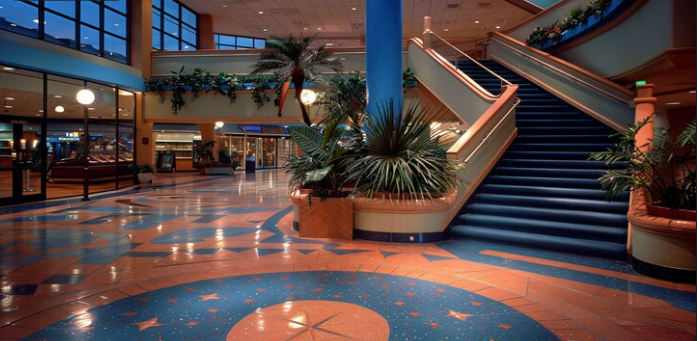
A high-gloss marble floor in a Dubai hotel lobby is a masterpiece of interior design until a guest arrives with wet shoes from the poolside. Most property owners view flooring as a purely aesthetic asset, completely ignoring the coefficient of friction until a liability claim arrives on their desk. The uncomfortable truth is that the more expensive a floor looks, the more dangerous it usually is when moisture is introduced.
The Financial Gravity of the Guest Experience
In the luxury hospitality sector, a single slip is not just a medical emergency; it is a brand catastrophe. When a guest pays four figures for a night in a premium suite, their expectation of safety is absolute. If you are managing a hotel or even a high-end home in Dubai, you are operating a high-traffic environment where a non slip tile treatment is a baseline requirement for operational survival.
Most business owners operate under the delusion that “Caution” signs are a valid safety strategy. They are actually just an admission of negligence in a court of law. A professional non slip tile treatment is an analytical move that shifts a variable risk into a controlled safety metric without ruining the visual appeal of a ten-million-dirham fit-out.
A ‘Wet Floor’ sign is a confession of a hazard you chose not to fix.
Safety isn’t about being nice to your guests; it is about protecting your balance sheet from the high cost of a fractured hip and a subsequent lawsuit.
Why the Ceramic Tile Anti Slip Coating is the Industry Standard
The misconception that safety requires a “sandpaper” texture persists among developers. Modern ceramic tile anti slip coating works at a microscopic level to increase traction without dulling the finish of the material. These treatments create an invisible tread pattern that only engages when a foot applies pressure or moisture is present, maintaining the “showroom” look of the lobby.
Whether you are overseeing a construction site office or a luxury villa in Palm Jumeirah, the physics remain identical. You need a surface that disrupts the hydroplaning effect. A proper non slip tile treatment alters the surface tension of the tile, ensuring that even smooth leather soles can find purchase when the humidity from the Dubai heat follows guests inside.
Traction is an invisible asset that you only appreciate once it disappears.
When the floor is treated, the risk of a person’s center of gravity shifting unexpectedly drops by more than 80%, regardless of the footwear.
Transitional Zones and the Danger of the “Silent” Spill
The most dangerous areas in any Dubai hotel are the “transitional zones”—the space between the infinity pool and the bar, or the marble entrance from the valet parking. This is where moisture accumulates silently. In these areas, a standard cleaning schedule is insufficient because a floor can become lethal in the seconds between a spill and a janitor’s arrival.
Implementing a non slip tile treatment in these zones provides a permanent safety margin that doesn’t rely on staff vigilance. This is where Non Slip Concrete And Floor Coating Services in Dubai become relevant for back-of-house areas and entryways. These services ensure that the ruggedness of the exterior environment doesn’t compromise the safety of the polished interior.
The transition point from the pool deck to the lobby is where most hotel accidents are born.
If you don’t control the friction at the entry points, you lose control of the safety narrative throughout the entire building.
Comparative Safety Metrics for Common Hotel Surfaces
| Surface Type | Natural Slip Risk | Maintenance Difficulty | Effectiveness of Treatment |
| Polished Marble | Extreme | High | Excellent |
| Ceramic/Porcelain | High | Low | Very High |
| Polished Concrete | Medium | Medium | Good |
| Natural Stone | Variable | High | Moderate |
The Story of the Five-Star Liability
Consider a prominent hotel in the Downtown district. They had a pristine, book-matched marble floor in their main dining area. One evening, a condensation drip from an overhead AC vent created a small, nearly invisible patch of moisture. Three minutes later, a high-net-worth guest stepped on that patch and suffered a significant injury.
The hotel didn’t just face a massive legal settlement; they faced a PR nightmare as the guest shared the experience on social media. They eventually called in Anti Slip floor Solution and Flooring experts to treat the entire 1,200-square-meter ground floor. The treatment was completed overnight, changed nothing about the look of the marble, and provided the manager with a documented safety certificate for their insurers.
Safety is always cheaper when it is a proactive investment rather than a reactive penalty.
The property learned the hard way that a beautiful floor is a liability if it cannot be walked upon with absolute confidence.
Beyond Hotels: Construction and Residential Needs
While hotels are the most visible practitioners of slip prevention, construction offices and private homes in Dubai face the same physics. Construction site offices often have high-gloss ceramic tiles that become lethal when mixed with the fine sand and dust of a job site. A ceramic tile anti slip coating prevents workers from slipping while moving between the field and the desk.
At home, the risks are often higher because of children and the elderly. Applying a non slip tile treatment in your kitchen or bathroom is the final step in creating a truly secure environment. The floor does not care if you are a managing director or a toddler; if the coefficient of friction is too low, gravity will win every time.
The floor is the most used piece of equipment in your building; treat it like one.
Choosing to ignore the slip risk in a private residence is simply waiting for a domestic emergency to happen.
Long-Term Maintenance and Grip Retention
A common error is assuming that a non slip tile treatment is a permanent fix that requires zero further thought. Over time, grease, soap residue, and fine Dubai dust can fill the microscopic pores created by the treatment. If the floor feels slippery despite being treated, it is usually because it is dirty at a microscopic level.
You must use specific, pH-neutral cleaners that don’t leave a waxy film behind. Any non slip tile treatment will eventually lose its effectiveness if it is buried under a layer of cheap floor wax or heavy detergents. High-traffic hospitality areas might need a re-evaluation of the treatment every two to three years to ensure compliance with international safety standards.
A dirty ‘non-slip’ floor is just a slip-hazard in disguise.
Regular friction testing with a digital tribometer is the only way to know for certain if your safety margins are still intact.
FAQs on Anti-Skid Tile Treatments
Will the treatment change the color of our marble or ceramic tiles?
No. A high-quality non slip tile treatment is an invisible chemical process. It works on a micron level to change the surface structure. Unless you are looking at the tile under a microscope, you will see no difference in the color, pattern, or the high-gloss shine of your floor.
How much downtime should we expect?
For most commercial spaces, the application can be done during low-occupancy hours or overnight. Unlike epoxy coatings, a chemical non slip tile treatment requires no drying time. Once the solution is neutralized and rinsed away, the floor is safe for foot traffic immediately.
Is it better to replace the tiles with “natural” non-slip options?
Replacing tiles in a functioning hotel or home is a logistical and financial nightmare involving dust, noise, and demolition. Treating your existing floor with a non slip tile treatment is about 15% of the cost of replacement and takes a fraction of the time. It is the analytical choice for any business owner concerned with ROI.
Does it make the floor harder to clean?
Because the surface is now microscopically textured, it can hold onto dirt slightly more if you use the wrong cleaning tools. However, using a microfiber mop system and the correct degreasing agents solves this problem entirely. Most hotels find that their cleaning routine remains almost identical.
How do we prove the floor is safe to our insurance provider?
Professional ceramic tile anti slip coating applications should come with a certificate of compliance. This document proves that your floor meets or exceeds the Pendulum Test Value (PTV) or the Static Coefficient of Friction (SCOF) requirements set by safety regulators. This is your primary defense against negligence claims.
The aesthetics of your property should never be prioritized over the physical safety of the people inside it. In Dubai’s competitive market, a reputation for safety is a quiet but powerful differentiator.
Securing your floors is not an optional “extra”—it is a foundational step in professional risk management. It is a quiet, invisible improvement that pays for itself every time a guest walks across a wet lobby and stays on their feet.