
If your floor has started feeling like an ice rink, your first reaction is usually panic — and your second is cost. Should you rip everything out and replace the tiles? Or is an anti slip floor treatment enough?
A lot of property owners assume replacement is the “proper” fix. But when you actually break down the time, mess, and money involved, the answer is often very different.
Let’s break it down in practical terms.
The Real Cost of Tile Replacement
Tile replacement is not just about buying new tiles. It includes:
- Removing existing tiles
- Breaking and disposal work
- Surface re-leveling
- Adhesives and reinstallation
- Labor charges
- Area closure time
In many Dubai homes and buildings, this can quickly become expensive and disruptive. You may need to block off the area for days. In offices or buildings, that downtime itself becomes a cost.
Replacement makes sense if tiles are broken, loose, or structurally damaged. But if the only problem is slipperiness, replacement is often more than what is actually needed.
What Anti Slip Floor Treatment Actually Does
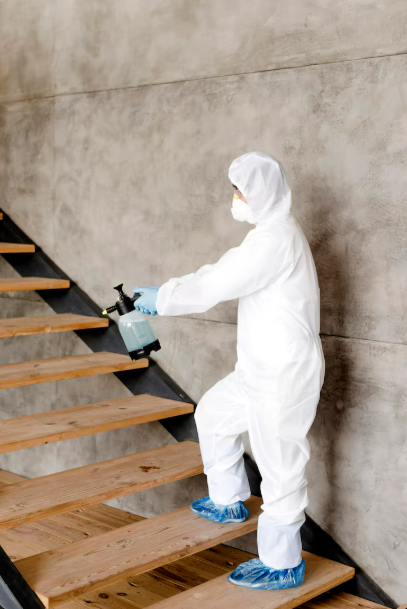
An anti slip floor treatment works on the tiles you already have. Instead of removing them, the treatment improves surface grip.
It does not usually add a thick visible layer. It changes the microscopic texture so the floor has more traction underfoot — especially when wet.
That means:
- No demolition
- No redesign
- Minimal downtime
- Lower overall cost
For many indoor tile and stone surfaces, this alone solves the safety problem.
Where Non Slip Concrete Coating Fits In
For concrete areas — like ramps, parking zones, service corridors, and some outdoor walkways — a non slip concrete coating is often used instead of tile replacement.
Non slip concrete coating is applied directly to the concrete surface to create durable traction. It is designed for heavier wear and more exposure.
This is usually more practical than removing and redoing the entire concrete surface, and it is specifically meant for high-risk slip zones.
Cost Difference Over Time
When you compare numbers, treatment or non slip concrete coating usually costs significantly less than full replacement.
Replacement is a one-time heavy expense. Treatment is a targeted safety upgrade.
Also consider:
- No relocation needed
- No major shutdown
- Faster completion
- Lower labor involvement
For landlords and facility managers in Dubai, this often makes treatment the more economical route.
Downtime Matters More Than People Expect
One part people underestimate is disruption.
Tile replacement brings:
- Noise
- Dust
- Area closure
- Movement restrictions
Anti slip floor treatment or non slip concrete coating is usually completed much faster, often area by area. That matters in hotels, offices, clinics, and residential buildings where access cannot be blocked for long.
When Replacement Is the Better Choice
Replacement is the right move if:
- Tiles are cracked or hollow
- Surfaces are uneven
- There is water damage underneath
- The floor is structurally failing
In those cases, treatment alone is not enough. Safety comes first.
But if the tiles are in good condition and only slippery, treatment is usually the smarter financial decision.
The Simple Truth
If your floor is slippery but otherwise in good shape, you usually do not need full replacement. Anti slip floor treatment — or non slip concrete coating for concrete areas — can fix the safety issue at a much lower cost and with far less disruption. A proper Anti Slip floor Solution and Flooring experts usually delivers better value than replacing perfectly good tiles.
Choosing the right Non Slip Concrete And Floor Coating Services can solve slip risks faster and at a lower cost than replacing the entire floor.
FAQs
1. Will anti slip treatment change how my tiles look?
In most cases, no major visual change. The finish stays very close to original, just with more grip underfoot.
2. How long does anti slip floor treatment last?
With normal cleaning and use, it typically lasts years. High-traffic areas may need periodic re-treatment.
3. Is treatment cheaper even for small areas?
Yes — especially for bathrooms, kitchens, and entrances. Replacement has fixed overhead costs that make small jobs expensive.
4. Can treatment be done without closing the whole area?
Usually yes. Many projects are done in sections so access isn’t fully blocked.
5. Does replacing tiles guarantee they won’t be slippery again?
No. Many new tiles are polished and smooth. Without choosing a textured finish, slip risk can return over time.